

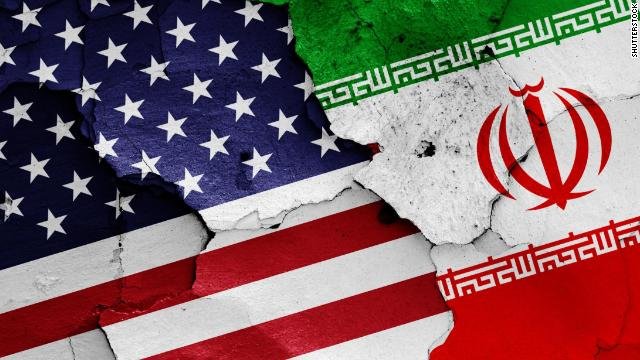
IRAN-US Conflict Latest Update: How Pakistan Is trying to Bring Peace
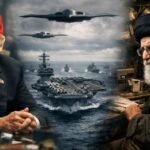
On 28 February 2026, a war started between the United States and Iran when a massive airstrike was carried out by the United States and Israel targeting Iranian military sites. The main targets were Iran’s nuclear facilities and its leadership. The strike also targeted key leaders, including the Supreme Leader of Iran, Ayatollah Ali Khamenei, along with several other military officials. It also affected dozens of civilians.
Why Did tension Rise between Iran and the United States?
The tension between Iran and the United States has risen mainly because the U.S. does not want Iran to become a nuclear power. There are too many restrictions imposed on Iran, which prevent it from trading with the rest of the world. Even though Iran is a country rich in oil, it cannot fully benefit from global trade due to these American sanctions. Israel is also supporting the United States in this conflict. The former Supreme Leader of Iran, Ali Khamenei, was very strong and had launched attacks on Israel multiple times. Additionally, the Strait of Hormuz, which Iran controls, was completely closed due to the war. This happened after U.S. airstrikes reportedly killed the Supreme Leader, Ayatollah Ali Khamenei.
Global Impact of the Iran-US Conflict (Oil, Economy & Security)
The Iran–U.S. conflict has had a very negative global impact. Oil prices have risen sharply worldwide because the Strait of Hormuz, a major global trade route, has been closed. Many ships are waiting to pass through, but Iran is not allowing transit. As a result of the war, the global economic situation has worsened. Many flights have been canceled around the world, making travel difficult for people. Oil prices continue to rise due to the ongoing conflict between Iran and the United States.
Iran is not backing down and is seeking revenge for the death of its Supreme Leader, Ali Khamenei. Iran has been carrying out continuous attacks across the Middle East, targeting airbases in countries including the United Arab Emirates, Qatar, Bahrain, Oman, and Saudi Arabia. Tensions have risen significantly as these attacks occur daily. Iran has launched drone and missile strikes, some of which have hit civilian areas, causing serious problems for people in the region. Several individuals have been injured, and some have lost their lives in these attacks. Iran has also carried out attacks on Israel using hypersonic missiles.
How Pakistan is trying to Act as a Global Peacemaker
Pakistan has good relations with both the United States and Iran. In this conflict, Pakistan has called for global peace and has shown its willingness to support efforts to reduce tensions between both countries. Recently, Pakistan held a conference in Islamabad, where the Foreign Minister, Ishaq Dar, invited the foreign ministers of Saudi Arabia, Turkey, and Egypt for talks on the Middle East conflict. The meeting was positive, although it did not immediately result in peace.
However, Pakistan continued its diplomatic efforts. After some time, negotiations between the United States and Iran began, with Pakistan playing an important role. Pakistan helped facilitate a temporary ceasefire agreement between both countries for two weeks. This agreement proved useful, as oil prices began to stabilize, and there were no attacks from either side during that period
Can Pakistan Successfully Reduce Iran-US Conflict?
The main question is: who is winning the Iran–U.S. conflict? The answer is that it is very difficult to determine a clear winner. The United States is a powerful and well-equipped country with advanced military capabilities, while Iran faces economic challenges and has more limited resources. However, history shows that no one truly wins in a war—it often results in a loss for humanity as a whole. Most conflicts can be resolved through dialogue and negotiation.
In this regard, Pakistan has once again invited both the United States and Iran to Islamabad for peace talks. Both countries agreed to participate. The U.S. delegation is being led by JD Vance, along with Special Envoy Steve Witkoff and Jared Kushner. On the Iranian side, the delegation is led by Parliament Speaker Mohammad Bagher Ghalibaf.
Several key issues were discussed during the talks, including the Strait of Hormuz, nuclear enrichment, and Israel’s actions in Lebanon. The discussions lasted for 21 hours, but the outcome was not very positive, as both sides did not accept the proposed agreements, and the results were not satisfactory. Despite this, Pakistan remains committed to continuing its efforts and will not abandon its role in trying to bring both countries toward peace.


Informative👍🏻
Nice
👍🏻👍🏻
Best artical between us & Iran war
[…] check our previous article: how Pakistan is trying to bring peace. […]
[…] in 2026, due to the recent conflict between the United States and Iran, many people are questioning whether the strait remains open or […]
[…] signal a strategic shift or move towards a de-escalation above maintenance. The withdrawal comes as peace talks between the U.S. and Iran remain on hold and in the face of a “broken ceasefire.” The Ford’s status was a […]