
US Carrier Leaves Middle East: The USS Gerald R. Ford’s Strategic Return
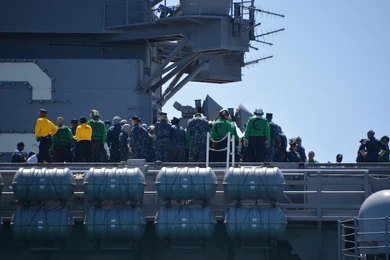
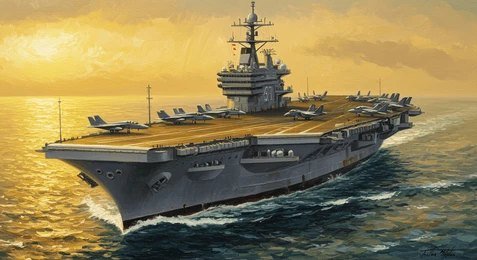
The United States is beginning to adjust and rethink its military presence in the Middle East. As the USS Gerald R. Ford, the world’s largest and most advanced aircraft carrier gets ready to leave the region, it marks the end of a notably long deployment for both the ship and its roughly 4,500 crew members. We understand that the US carrier leaves the Middle East in the coming days, returning to its homeport in Virginia, with an expected arrival around mid-May 2026.
Introduction: The USS Gerald R. Ford’s Departure from the Middle East
The USS Gerald R. Ford’s deployment has been one of the longest in recent years for a modern U.S. aircraft carrier. It was at sea for a long time, something like 309 days, although some estimates are more like 13 months when tensions in the region were running high. Its presence helped to highlight the U.S. strength and served as a warning to upcoming threats, especially as relations with Iran grew more tense and during the early 2026 conflict between the United States and Iran. As the carrier finishes up its mission, the focus shifts to why it’s leaving and what that could mean for security in the region and future U.S. policy in the Middle East.
Strategic Rationale Behind the Withdrawal
The decision for the US carrier leaves the Middle East comes down to a mix of factors, mainly the need for major maintenance and the heavy strain placed on both the ship and its crew after such an unusually long deployment.
- Operational Strain and Maintenance Requirements:
The USS Gerald R. Ford has stayed at sea longer than the normal six to seven month deployment, adding stress on the ship. This longer period of operation has shown visible wear and tear that calls for major repairs and maintenance. There are reports of technical problems on board, including problems with the sanitation systems, as well as damage from a fire in the laundry area. Defense Secretary Pete Hegseth said extending the carrier’s deployment involved tradeoffs with readiness and maintenance and emphasized the importance of bringing it home for proper servicing.
- Crew Fatigue:
As well as the human side is just as important. Some 4,500 sailors have been away from home for an unusually long time. It’s a long deployment and the crew naturally gets worn down so keeping them rested and rotated is important to keep morale up and them performing at a high level.
- Strategic Repositioning and De-escalation:
Some analysts believe the departure could signal a strategic shift or move towards a de-escalation above maintenance. The withdrawal comes as peace talks between the U.S. and Iran remain on hold and in the face of a “broken ceasefire.” The Ford’s status was a powerful warning, but its departure might be taken as an attempt to cool things down in an unstable area. The carrier has also been reported to have temporarily moved to Greece for maintenance, which could also increase operational flexibility in the larger Eastern Mediterranean region.
Implications for Regional Security and US Policy
The departure of the USS Gerald R. Ford inevitably changes the immediate naval environment in the Middle East, decreasing the American naval presence and firepower in the region. But it is worth noting that the U.S. will have a big naval presence.
-
Continued Naval Presence:
Two aircraft carriers, namely the USS G. H.W. Bush and USS Abraham Lincoln, respectively, will remain in the Arabian Sea even as the U.S. carrier departs the Middle East. They enforce a U.S. naval blockade on vessels moving oil or goods from Iranian ports, maintaining economic pressure on Iran. This suggests a retraining, rather than an absolute withdrawal, of naval power.
-
Impact on Regional Dynamics:
Scaling back from three carriers to two in the region could be read in different ways. Some may take it as a sign that U.S. commitment is easing, but having two carrier strike groups still signals a strong and capable presence. The Islamic Revolutionary Guard Corps (IRGC), however, has framed the Ford’s departure as a “humiliating retreat,” casting doubt on both the carrier’s durability and the broader U.S. naval stance.
-
Broader US Military Footprint:
U.S. military steps in the Middle East extend well beyond aircraft carriers. We have tens of thousands of soldiers based in 14 countries with bases in places such as Turkey, Jordan, UAE, Qatar, Bahrain and Kuwait. Recently, soldiers based in the area have increased to over 50,000 in the face of tensions, most especially the U.S. conflict with Iran in early 2026. Even as certain forces rotate in and out this strong presence shows a continued commitment to maintaining stability in the region.
Conclusion: The Evolving US Military Footprint in the Middle East
The withdrawal of the USS Gerald R. Ford, from the Middle East indicates a major shift in how the U.S. adapts its military strategy in the region. The choice is mostly for maintenance, and allowing the crew a break after a long deployment, but it is a sign of a flexible approach to balancing tension and power projection. The decision to pull the carrier out of the Middle East is not a sign of hiding by the U.S. but instead a strategic shift.
The U.S. still has a major armed forces there, including two other aircraft carriers that are actively in operation and a large number of land forces. This ongoing commitment and the capacity to adapt a force position as conditions change keeps the U.S. a key player in Middle East security. We expect future deployments will continue to balance the need for continued deterrence with the need to maintain the readiness and well-being of our naval forces and personnel.