
US Takes Out Seven Iranian Boats in the Strait of Hormuz Amid Escalating Shipping Clashes
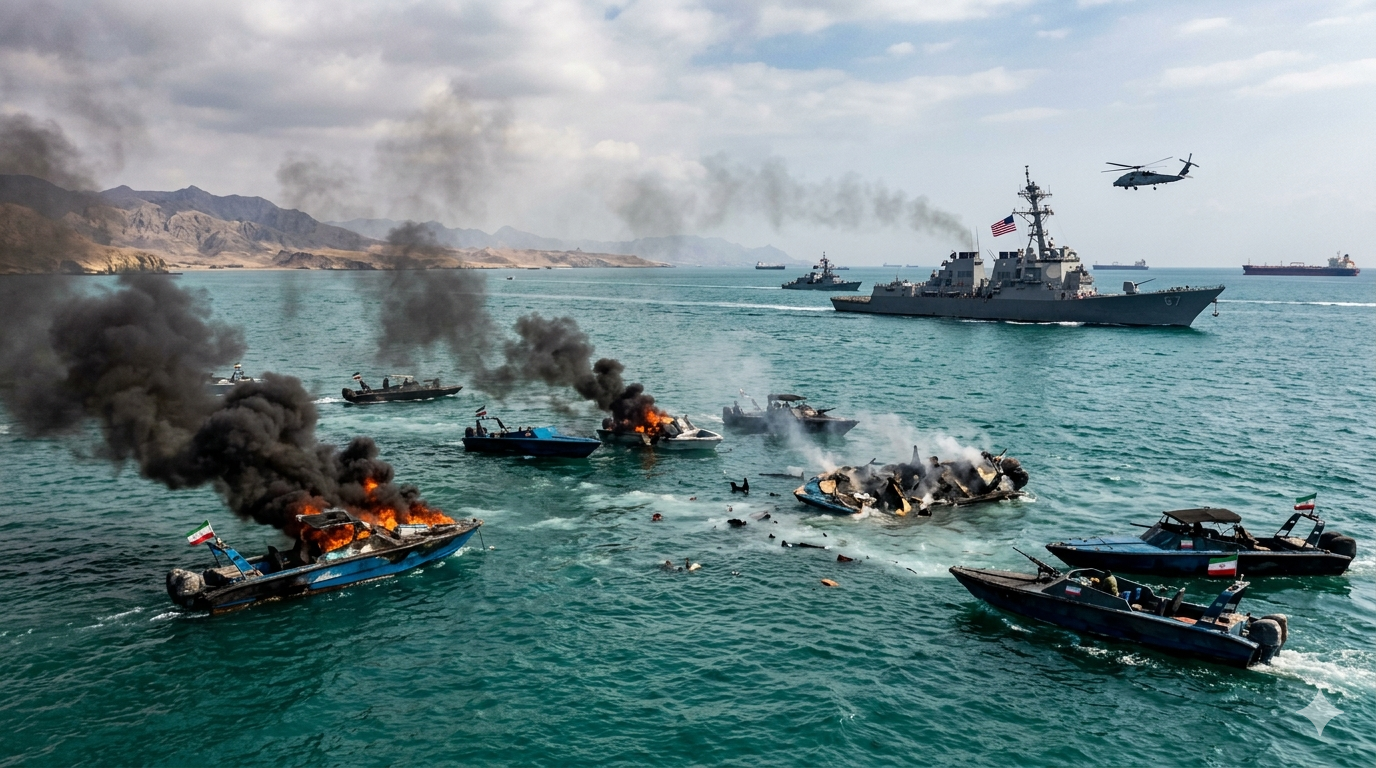
Tensions in one of the world’s busiest oil corridors (Strait of Hormuz) boiled over this week as the United States destroyed at least seven small Iranian boats in the Strait of Hormuz, officials say. The strikes in the Strait of Hormuz mark the latest escalation in a fast‑moving campaign to reopen and secure the narrow waterway for commercial ships after months of threats, blockades, and missile attacks.
What the US says happened in the Strait of Hormuz
US Central Command and senior Navy leaders have confirmed that Iranian forces launched a combined attack on American‑flagged and other vessels using cruise missiles, drones, and small armed boats.
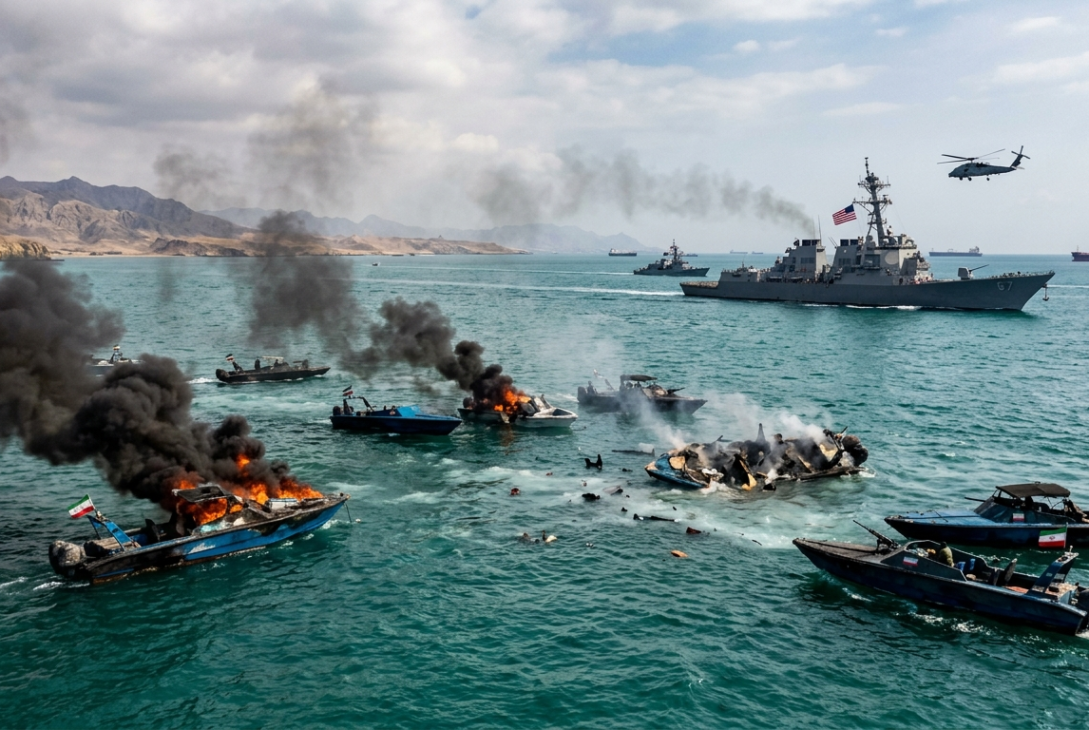
In response, US forces shot down incoming missiles and drones. destroyed several Iranian boat platforms that were attempting to interfere with shipping operations.
President Donald Trump later announced on social media that the United States had “shot down seven small” Iranian boats. He claimed that the Iranian strikes caused no major damage aside from a hit on a South Korean cargo ship, which he described as a minor incident.
The context of “Project Freedom” & Strait of Hormuz
The clash comes under the umbrella of what the administration has dubbed “Project Freedom,” a US‑led operation aimed at restoring free passage through the Strait of Hormuz for international shipping. The strait carries a large share of the world’s seaborne oil, and months of Iranian threats and mine‑laying activity had driven many commercial vessels away.
Under Project Freedom, US warships and aircraft are tasked with escorting and guiding merchant vessels through the narrow channel, using a mix of destroyers, helicopters, and long‑range monitoring systems. Central Command has said the effort involves multi‑domain forces and about 15,000 personnel across land and sea.
Two US‑flagged merchant vessels have already transited the strait under the new operation, according to US officials. The Navy emphasized that there were no dedicated “escorts” glued to each ship, but that US forces were actively patrolling and standing ready to respond to any Iranian move.
Iran’s response and denial
Iran’s Revolutionary Guard Corps has denied that commercial ships are freely crossing the strait. In a statement released via Telegram, the guards claimed that no large tankers or cargo vessels had made it through the area in recent hours and dismissed US claims as “unfounded.”
Iran’s military leadership has also portrayed its actions as defensive. Amir Hatami, the country’s top commander, said US destroyers had approached the strait while disabling their radar, and that Iran responded with gunfire, missiles, and attack drones to protect its waters. “The security of this area is a crucial priority for Iran,” he wrote.
The Iranian government has repeatedly warned that any attempt to force open the strait would be treated as an act of aggression. Tehran has tied its stance on the waterway to broader demands over sanctions relief, the lifting of a naval blockade, and changes to regional security arrangements.
Regional and global fallout
The destruction of seven Iranian boats raises the risk of further retaliatory strikes or broader regional conflict. The United Arab Emirates and other Gulf states have reported earlier Iranian attacks on their territory, while shipping companies worldwide are watching insurance costs and rerouting decisions closely.
Western governments have rallied behind the US line that the freedom of navigation in the Strait of Hormuz is a global interest. The US blockade on Iranian ports, which restricts many vessels from entering or leaving Iranian waters, has already had a major impact on Tehran’s economy and is now seen as a core piece of the pressure campaign.
Analysts warn that the current cycle of strikes and counter‑strikes could spiral quickly. Even limited clashes between fast boats and helicopters can ignite a wider confrontation, especially if an Iranian missile or drone hits a civilian tanker or an American warship. So far, US officials insist that casualties have been minimal, but the margin for error is shrinking by the day.
What comes next
For now, Washington is signaling that Project Freedom will continue and that the US intends to keep pushing commercial ships through the strait while standing ready to destroy any Iranian platforms that attack them. Iran, in turn, is likely to keep testing the limits of US tolerance, using small boats, mines, and drones to harass shipping without triggering an all‑out war.
In this high‑stakes game, every new missile intercepted and every boat sunk counts as both a tactical win and a political signal. How both sides calculate the risks in the weeks ahead will determine whether the Strait of Hormuz slips deeper into open conflict or slowly returns to being, once again, just a busy shipping lane.